This tour shows the main areas your team can use in Famulor. What you see in your own workspace depends on your role and the features included in your subscription.
Use the sidebar in Famulor to move between these areas. You can return to the dashboard at any time for a quick overview.

Dashboard and Milian

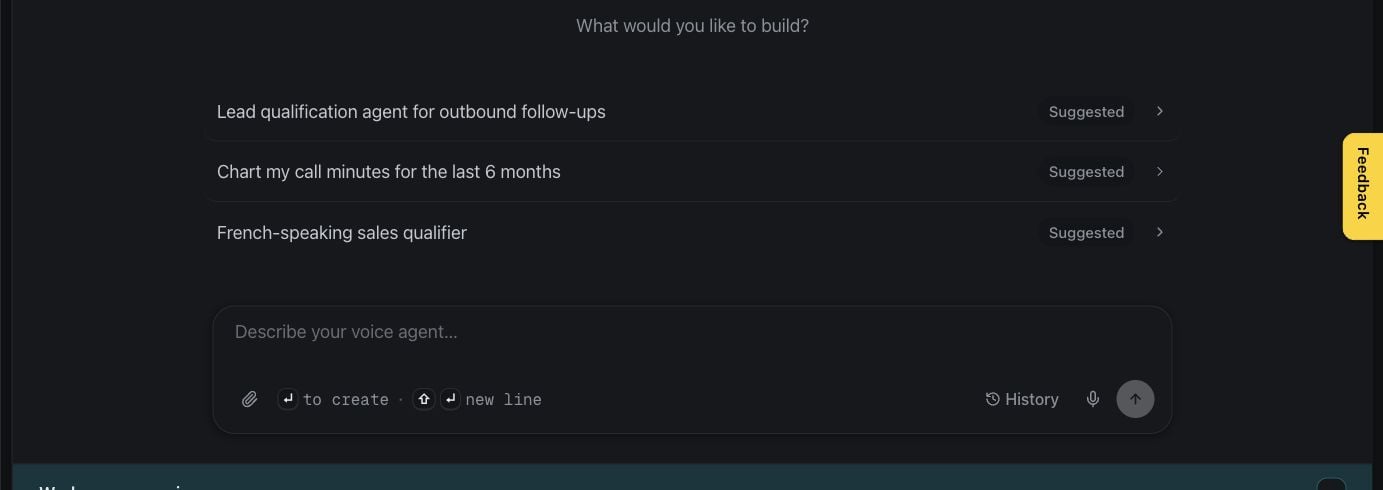
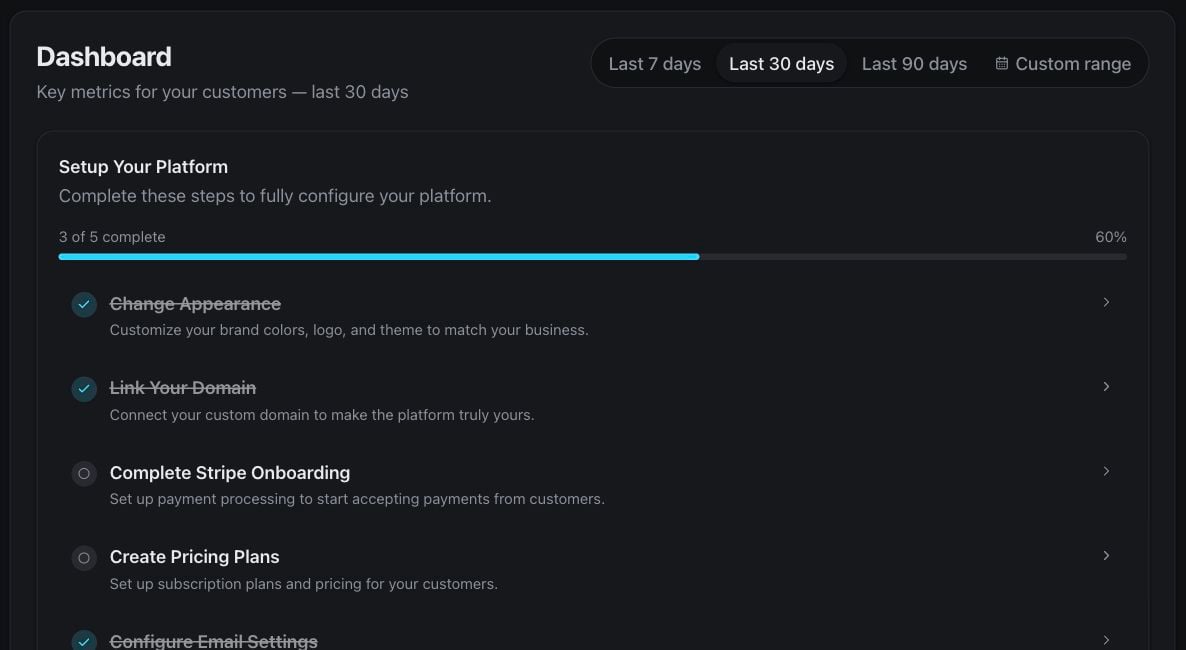
The dashboard brings your most important activity, shortcuts, and recent results together. Milian, the in-app copilot, can help you navigate the product and work with your workspace using your existing access.
Famulor dashboard with the Milian copilot

Your workspace dashboard and Milian copilot

Build your assistants

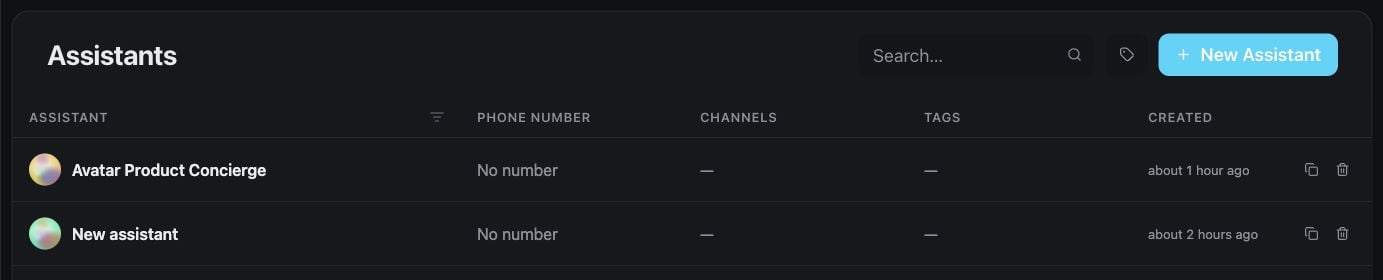
The Assistants page is the home for every voice and messaging assistant in your workspace. Create a new assistant, open an existing one, or continue refining its behavior.
Assistants overview

Browse and manage assistants

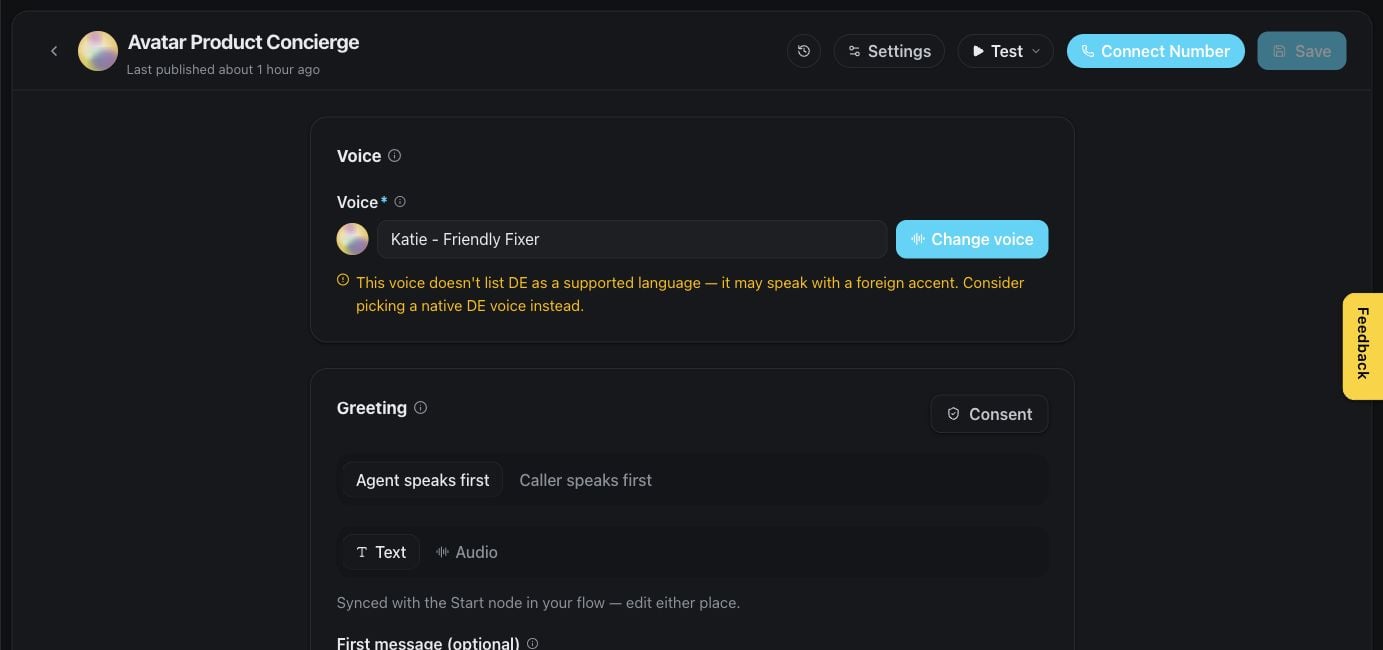
In the editor, shape the greeting and conversation instructions, test the experience, and save changes from one place.
Assistant editor

Edit and test an assistant

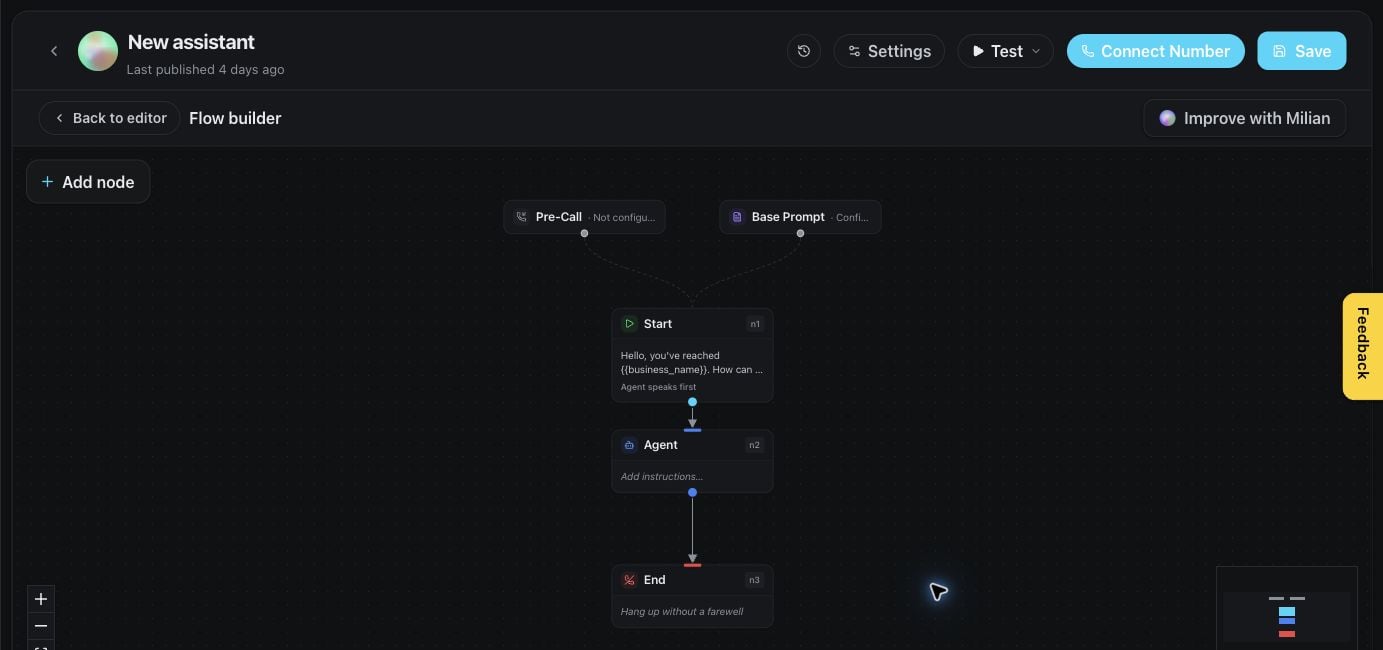
For structured conversations, the visual flow builder lets you connect steps, branches, actions, and handoffs.
Assistant flow builder

Design a structured conversation flow

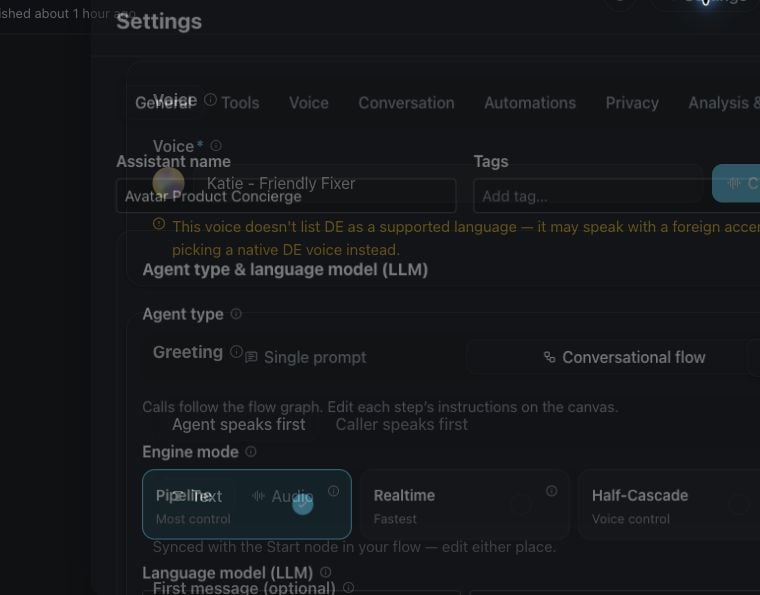
Assistant settings collect the detailed choices for voice, language, behavior, tools, knowledge, and connected channels. Available options can vary by workspace.
Assistant settings

Configure assistant settings

Review conversations

History is the shared record of calls and conversations. Filter the list to find a specific interaction, then open it for the full context.
Conversation history

Find past conversations

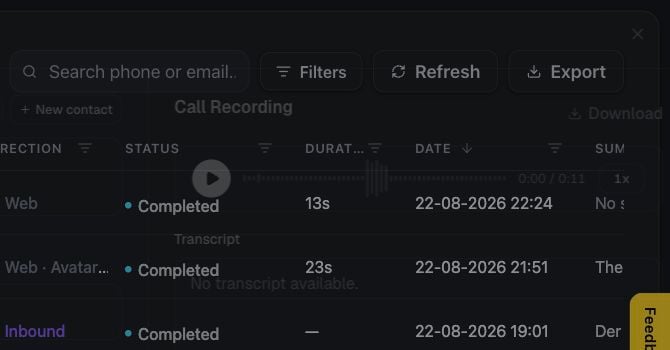
The detail view brings the transcript, outcome, collected information, and available media together, making it easier to review performance or follow up.
Conversation detail

Inspect one conversation in detail

Reuse routines

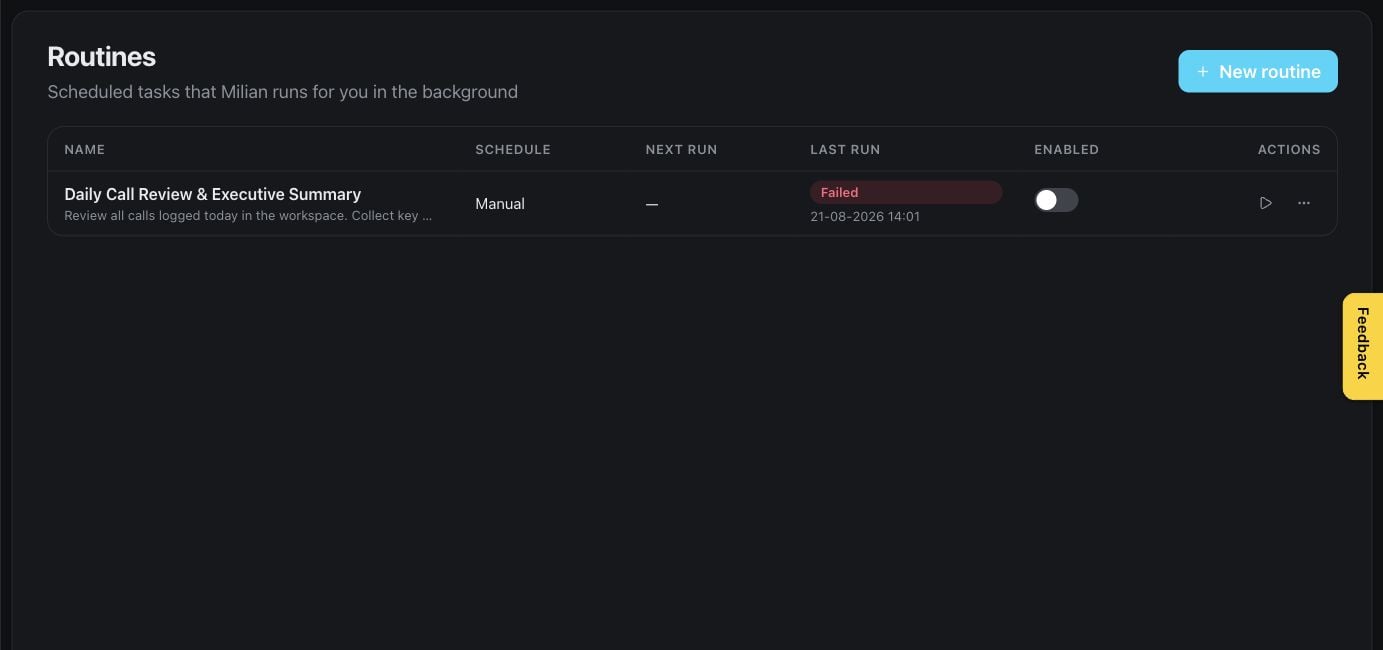
Routines package repeatable conversation behavior so it can be maintained once and reused across assistants. They are useful for common tasks such as qualification, booking, or escalation.
Routines overview

Create and manage reusable routines

Know and manage your audience

The Audience area brings contacts and the operational records around them into one place.
Audience overview

Browse your audience

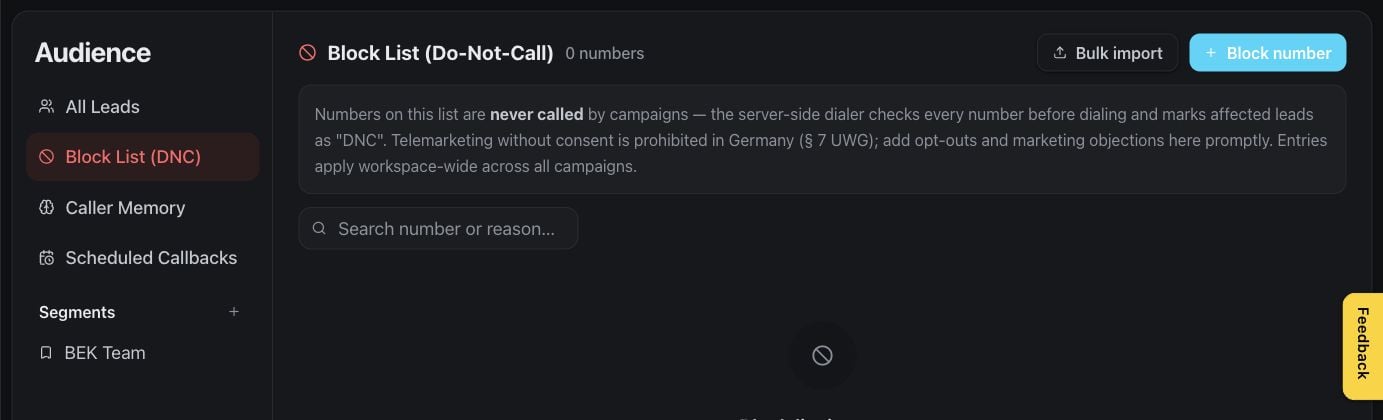
The do-not-contact list helps your team honor contact preferences. Authorized team members can review and maintain entries before outreach begins.
Do-not-contact management

Maintain the do-not-contact list

Memory records let you review what assistants may remember about a contact and manage that information when needed.
Audience memory records

Review contact memory

Callbacks keep requested follow-ups visible so they can be completed at the right time.
Callback overview

Track requested callbacks

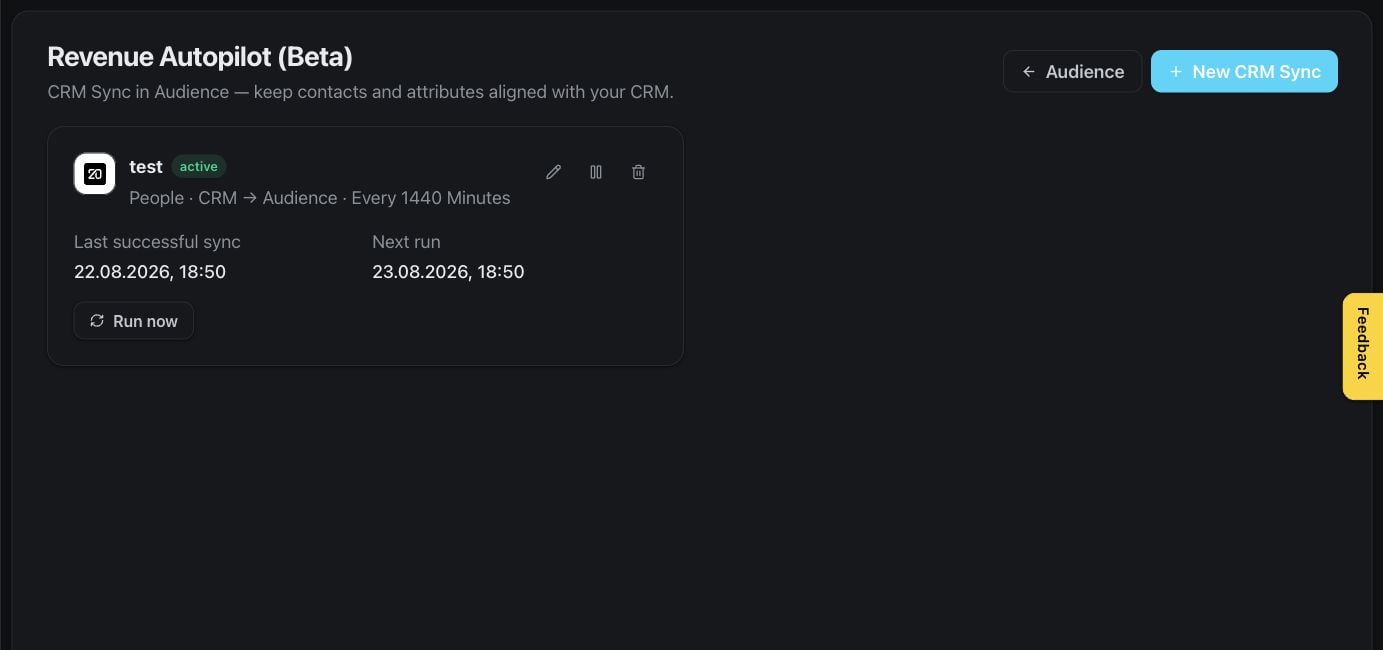
CRM sync connects contact activity with another business system. This page appears only when the feature is available to your workspace and your role permits configuration.
CRM synchronization settings

Manage CRM synchronization

Run campaigns

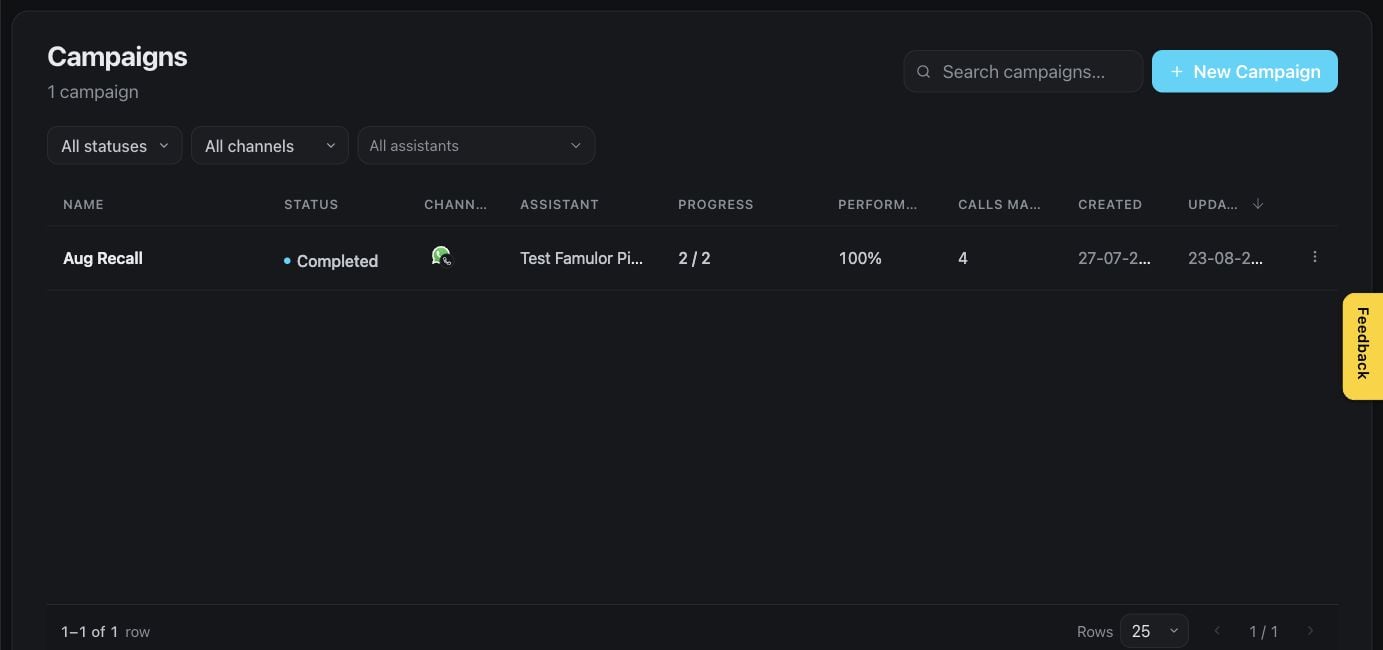
Campaigns coordinate outbound work: choose an assistant and audience, prepare the schedule, and follow progress from one place.
Campaign list

Browse outbound campaigns

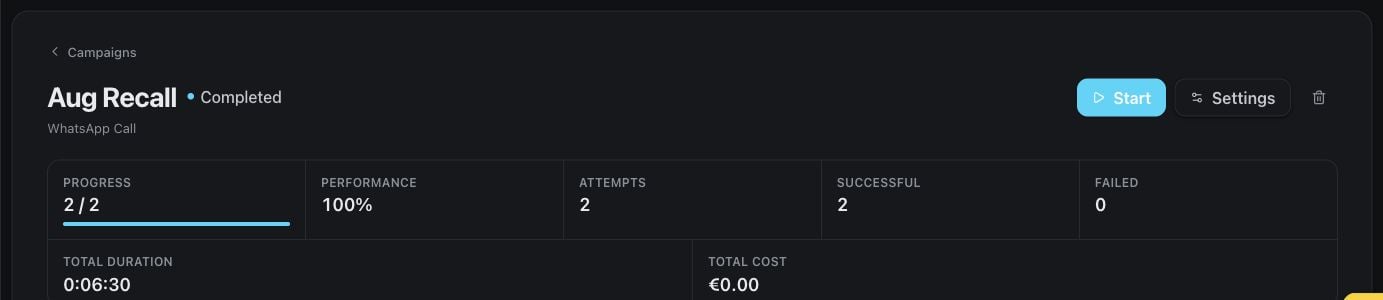
The campaign detail view focuses on setup, current status, and results for one campaign.
Campaign detail

Review one campaign

The board view groups campaign work by status for a fast operational overview.
Campaign board

Track campaign progress on a board

Improve quality with AI QA

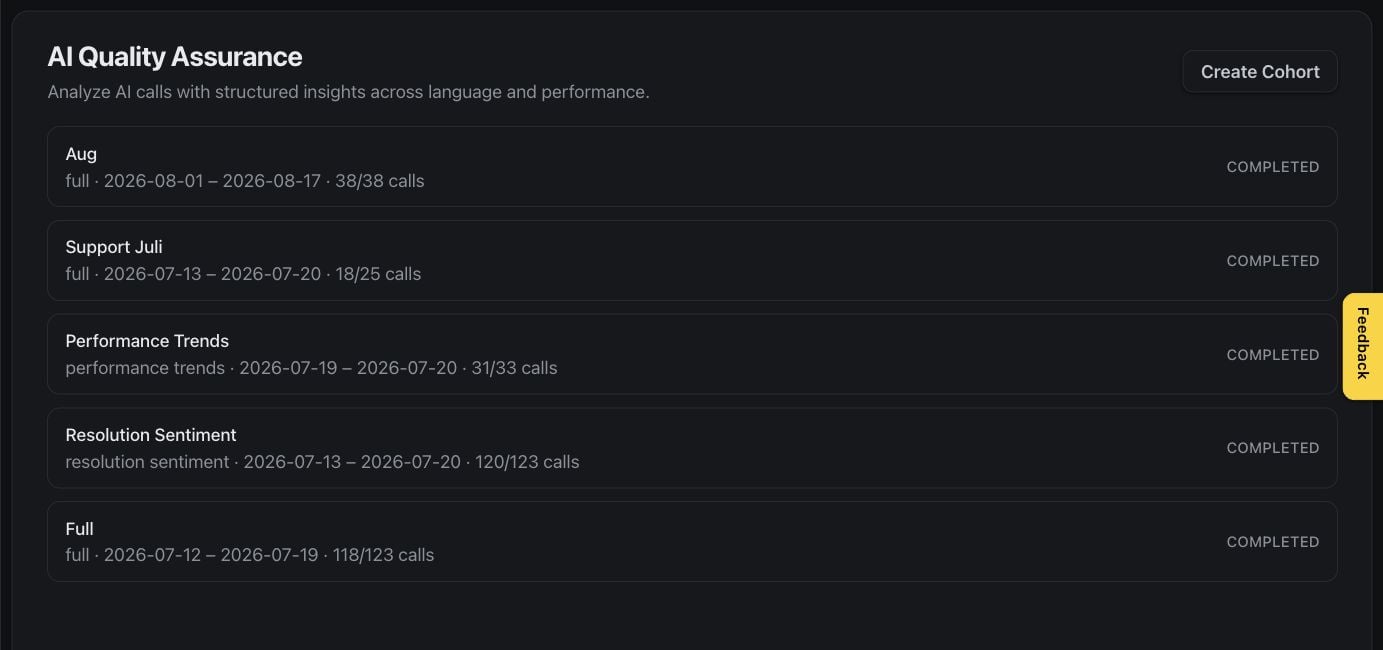
AI QA helps teams evaluate conversations consistently, find patterns, and focus coaching or assistant improvements where they matter most. Availability depends on your subscription.
AI quality assurance overview

Review AI-assisted quality results

Build a knowledge base

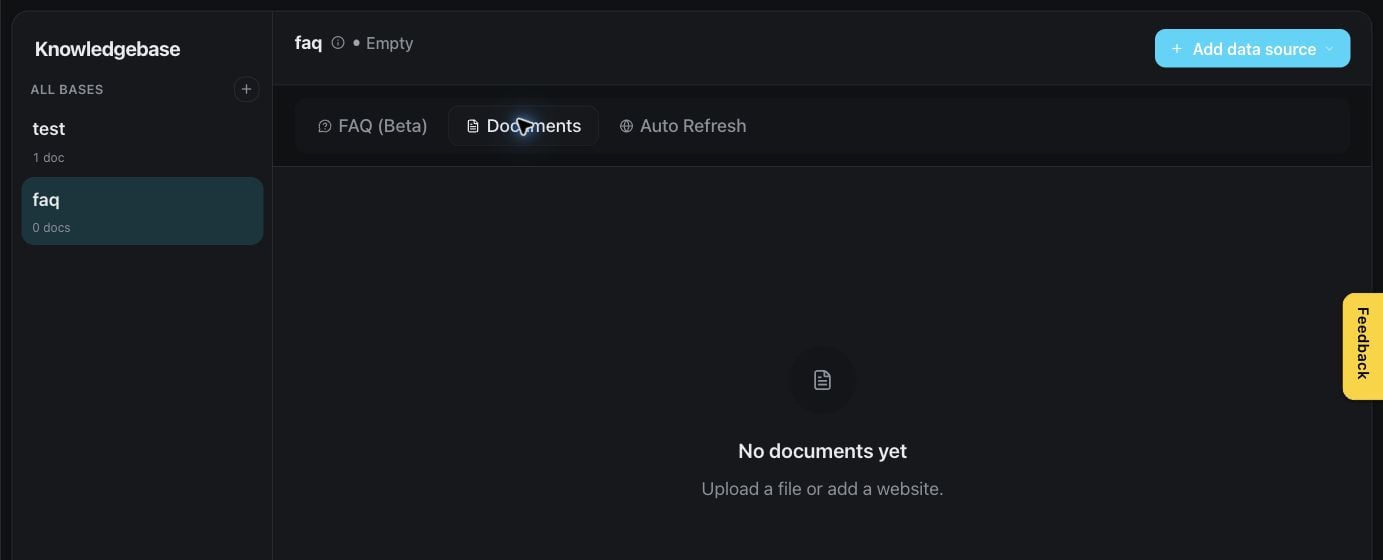
Add documents that assistants can use when answering questions. Keep source material focused and current for the most reliable answers.
Knowledge documents

Manage knowledge documents

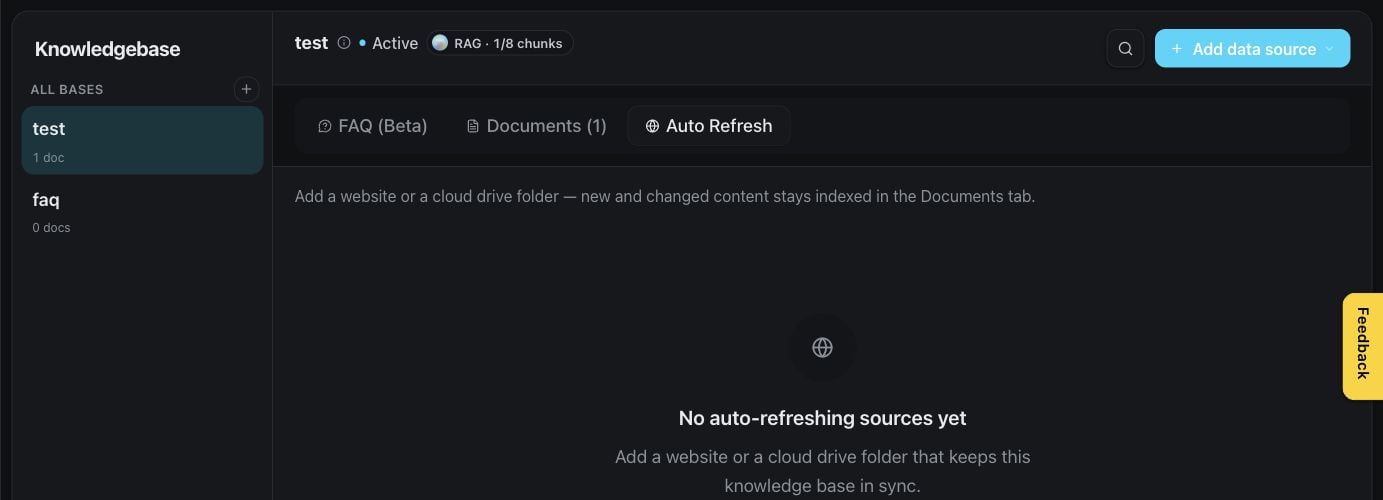
Auto refresh keeps supported sources up to date on a schedule, reducing manual maintenance.
Knowledge auto refresh

Schedule automatic knowledge refreshes

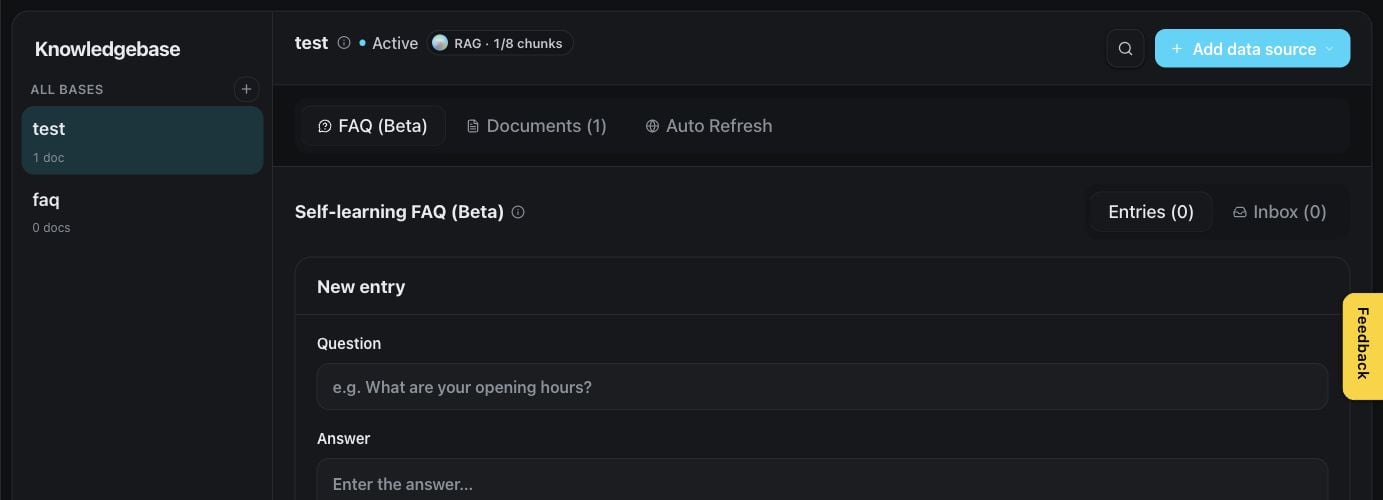
FAQs are ideal for concise, curated question-and-answer pairs that should be easy for an assistant to retrieve.
Knowledge FAQ management

Maintain frequently asked questions

Extend assistants with tools

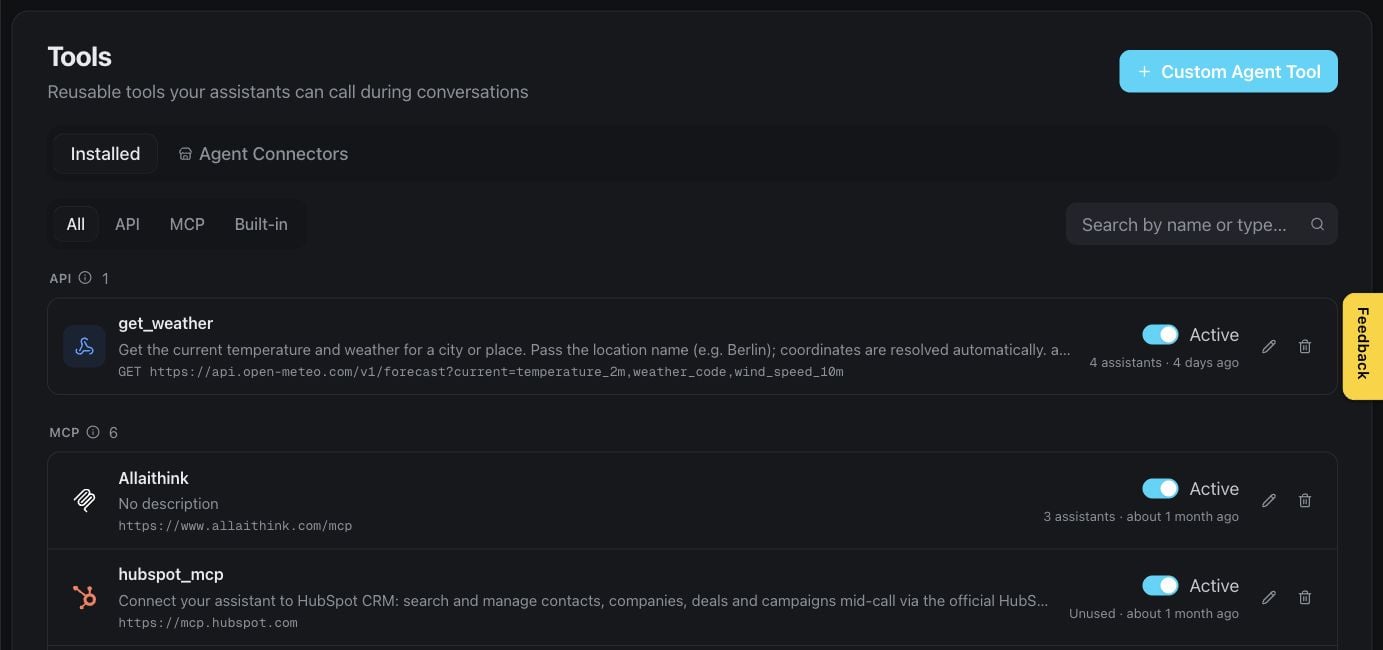
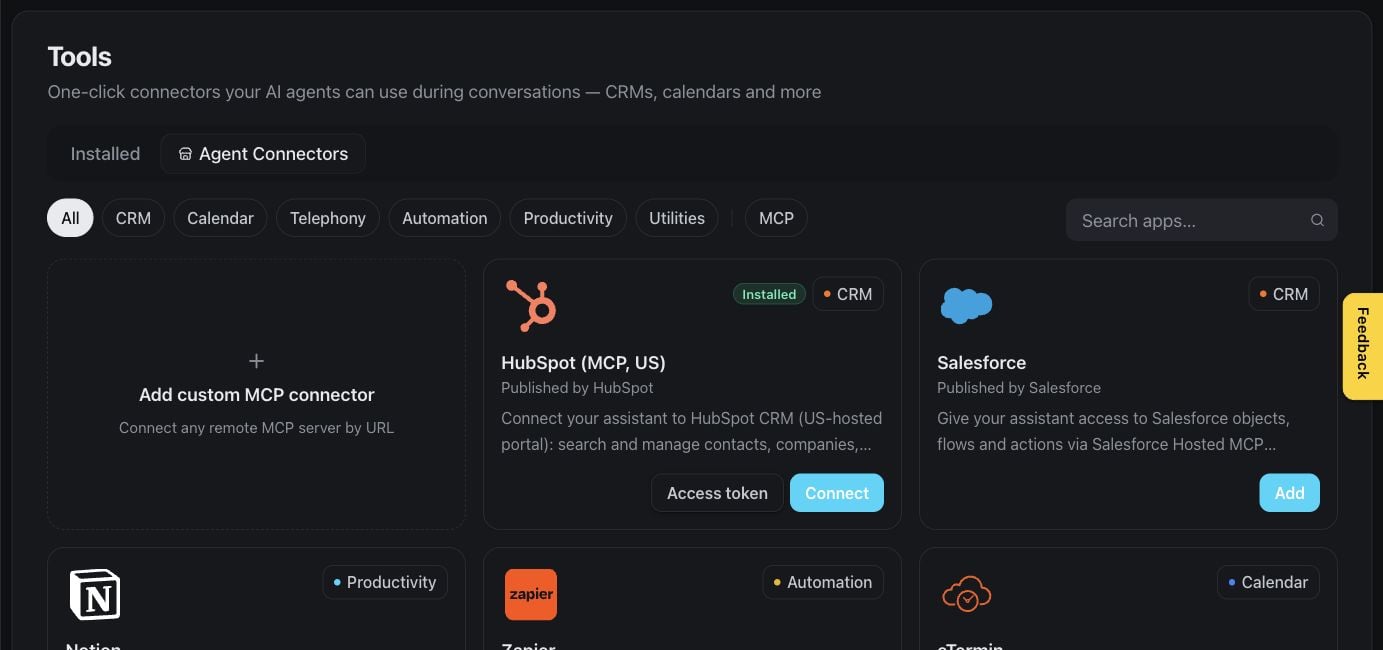
The installed view shows the capabilities already available in your workspace and where they can be managed.
Installed assistant tools

Review installed tools

The connectors catalog lets authorized users add supported business services. Some connectors may be optional or require separate access with the connected service.
Tools and connectors catalog

Browse available connectors

Manage bookings

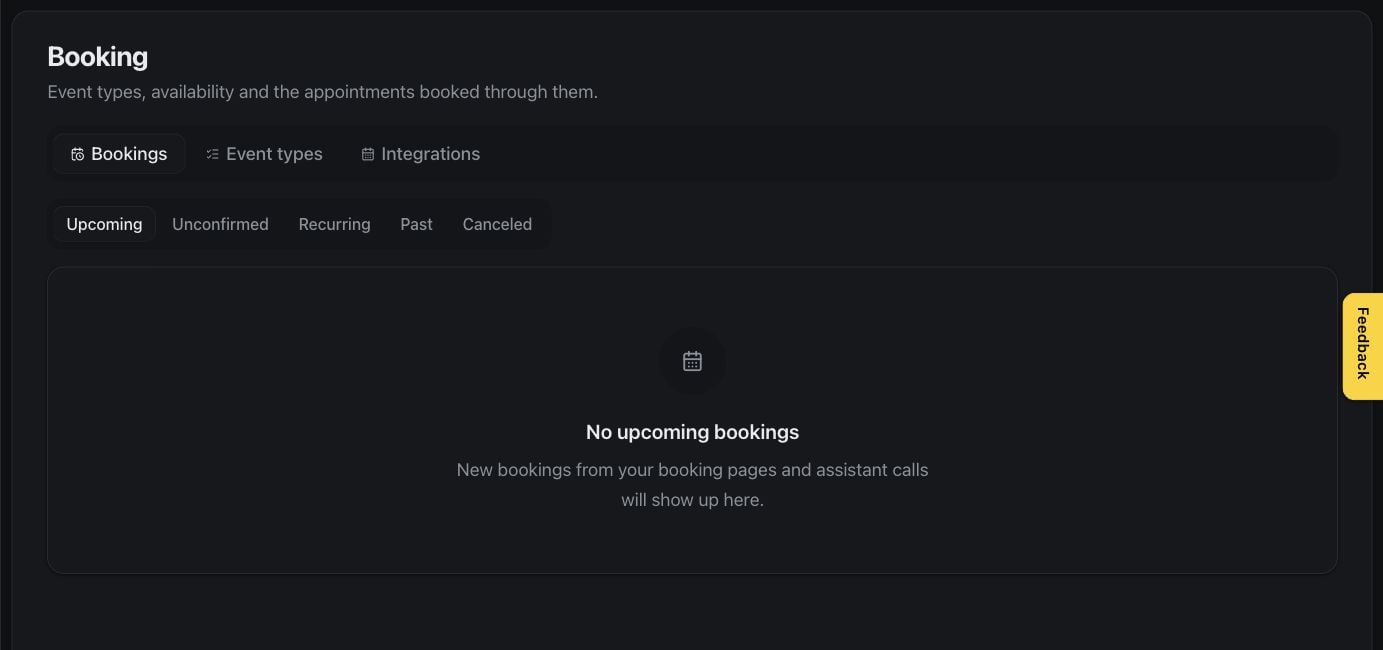
The bookings list gives your team a single view of appointments created through assistants and connected calendars.
Bookings list

Review bookings

Event types define what can be booked, including duration and availability rules.
Booking event types

Configure bookable event types

Calendars determine where availability comes from and where confirmed appointments are stored.
Booking calendars

Manage connected calendars

Booking integrations connect supported scheduling services. These settings are visible only to roles that can manage workspace connections.
Booking integrations

Configure booking integrations

Automate work

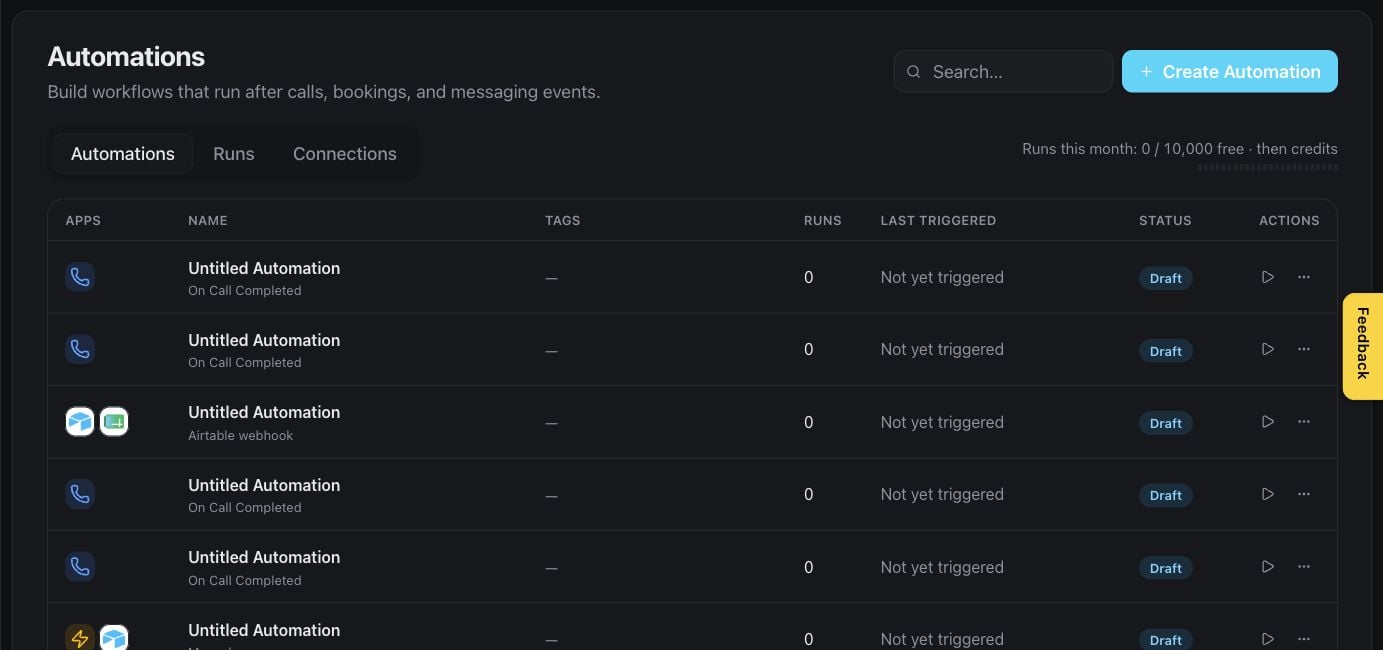
Automations turn recurring work into repeatable processes that can react to events and coordinate follow-up actions.
Automations list

Browse automations

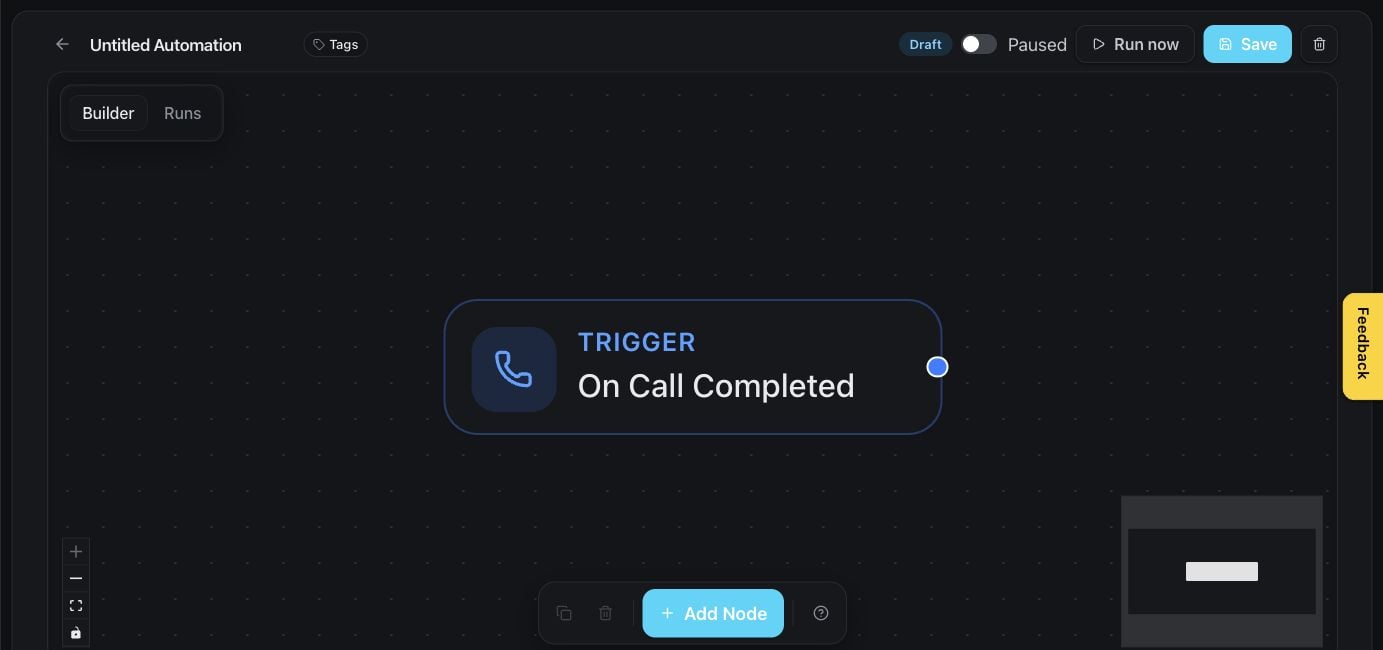
The builder provides a visual workspace for arranging triggers, decisions, and actions.
Automation builder

Build an automation visually

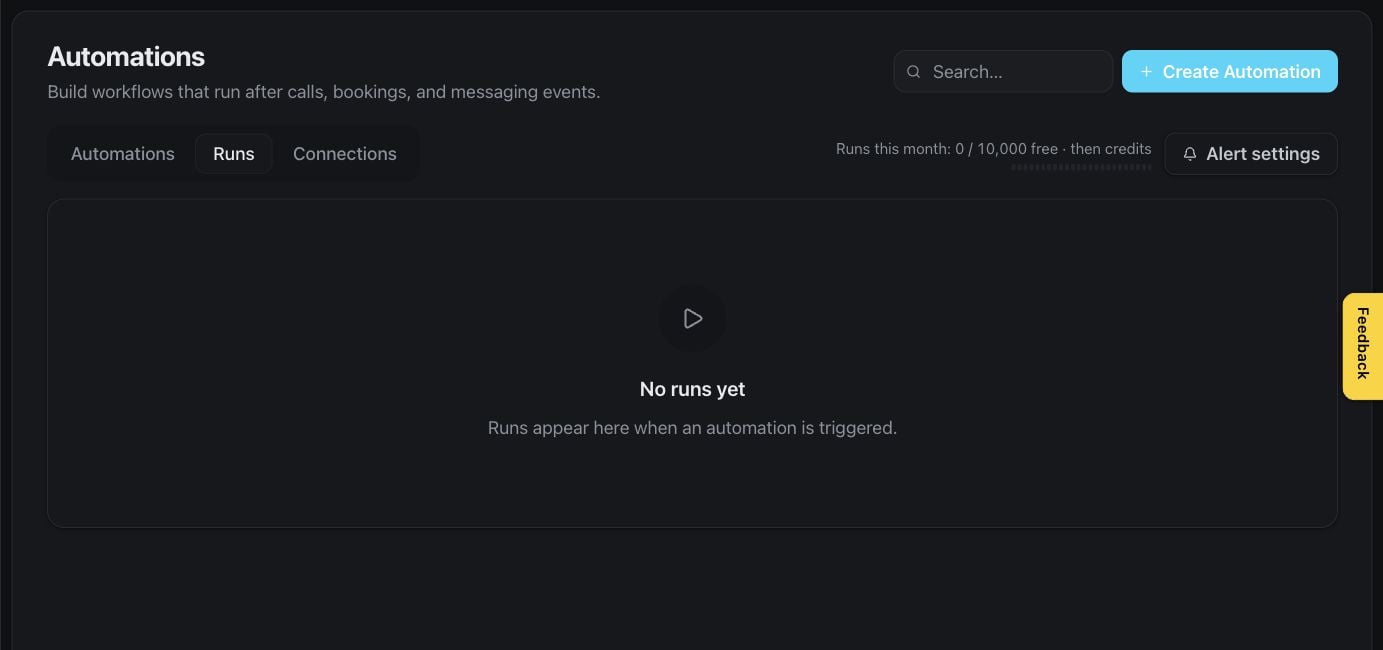
Run history shows what happened during each execution and helps authorized users investigate unsuccessful steps.
Automation run history

Review automation runs

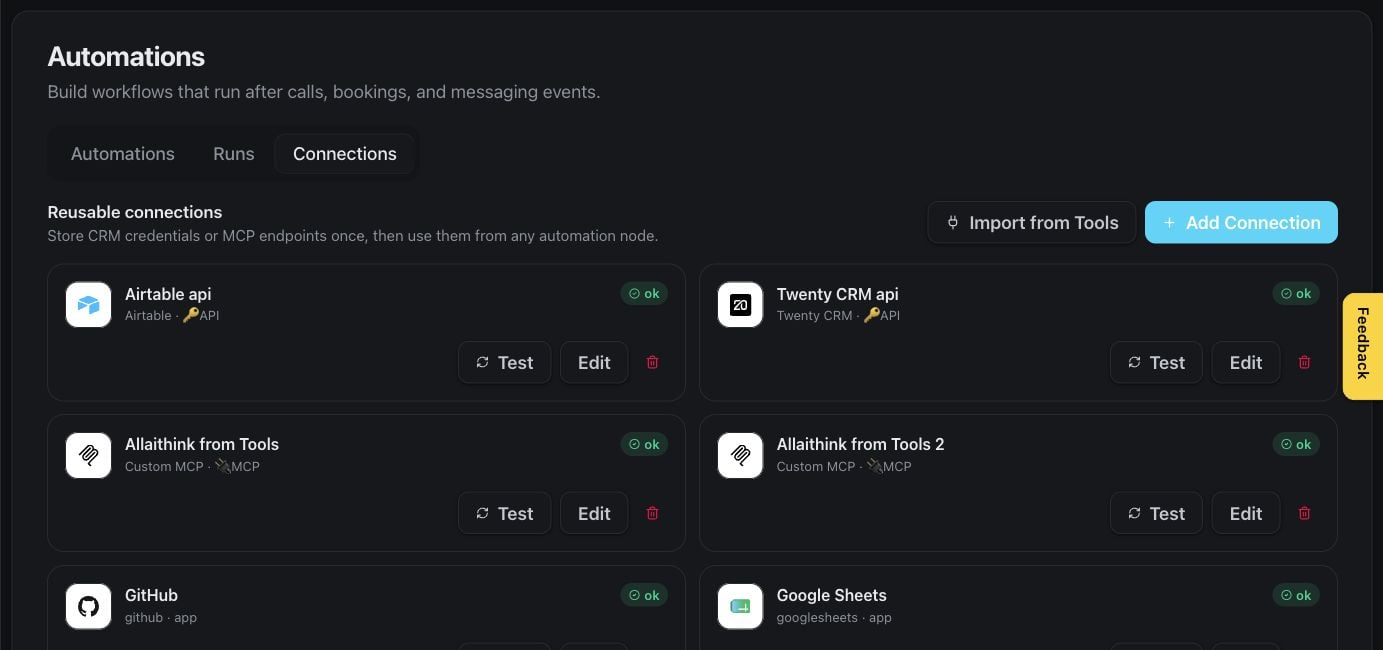
Connections are the accounts and services automations can use. Only workspace roles with configuration access can add or change them.
Automation connections

Manage automation connections

Understand usage and results

The Usage page helps workspace owners and authorized team members understand consumption over time and the balance available to the workspace.
Workspace usage overview

Review workspace usage

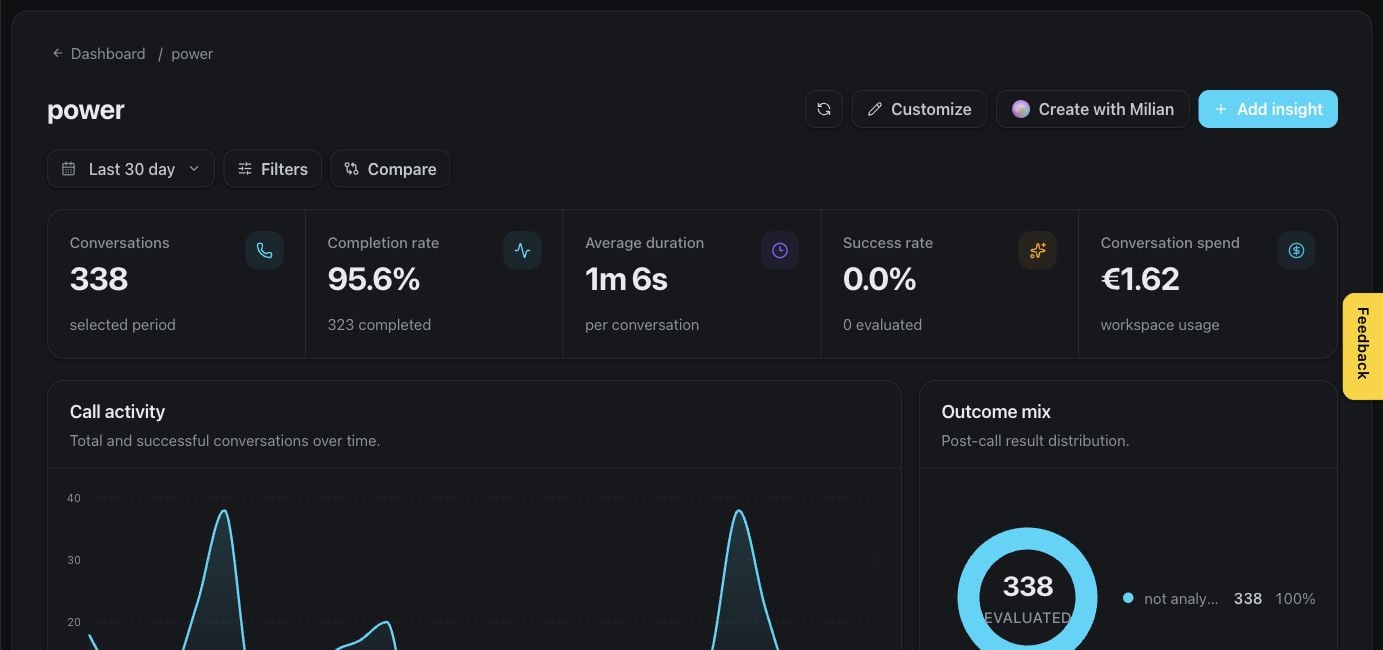
Custom dashboards turn workspace data into focused views for your team. Natural-language creation and advanced analytics may depend on your subscription.
Custom analytics dashboard

Create a custom dashboard

Configure your workspace

Settings are organized into focused panels. The panels available to you depend on your role and subscription.

Workspace, team, and preferences

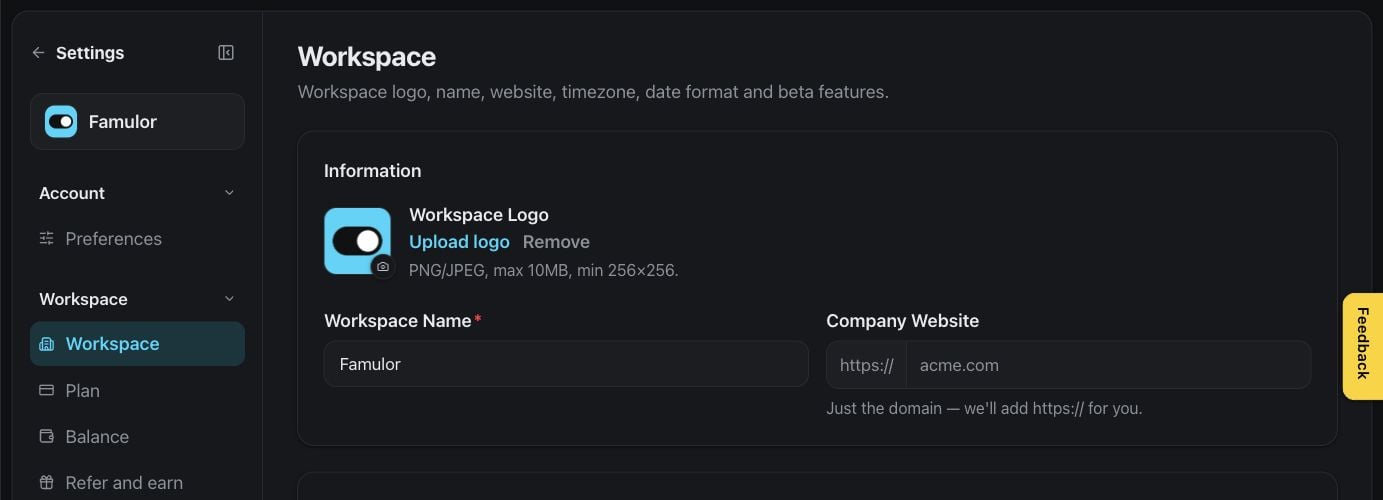
Workspace settings cover the name and shared identity used by your team.
Workspace settings

Manage workspace details

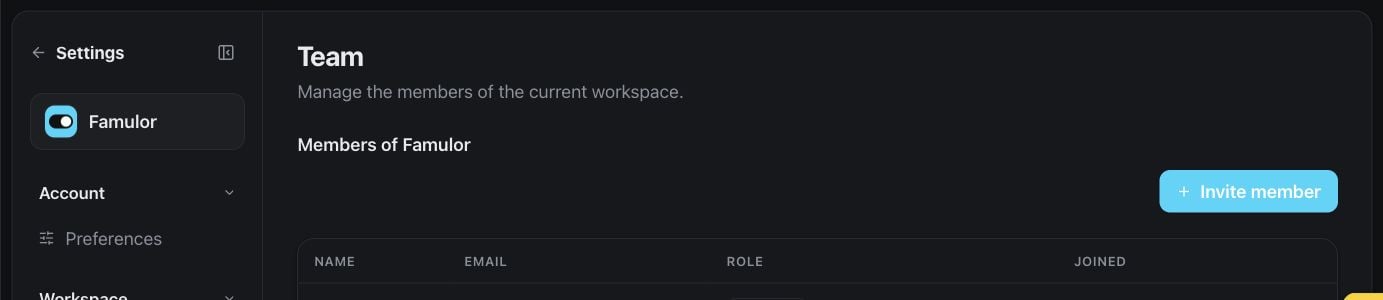
Team settings let owners and authorized admins invite members and manage their access.
Team settings

Manage workspace members

Preferences personalize the product experience, including appearance and other user-level choices.
Preference settings

Set your personal preferences

Subscription, balance, usage limits, and referrals

The plan page summarizes the workspace subscription and available options.
Plan settings

Review your subscription

Balance settings help owners monitor available credit and manage supported payment preferences.
Balance settings

Manage the workspace balance

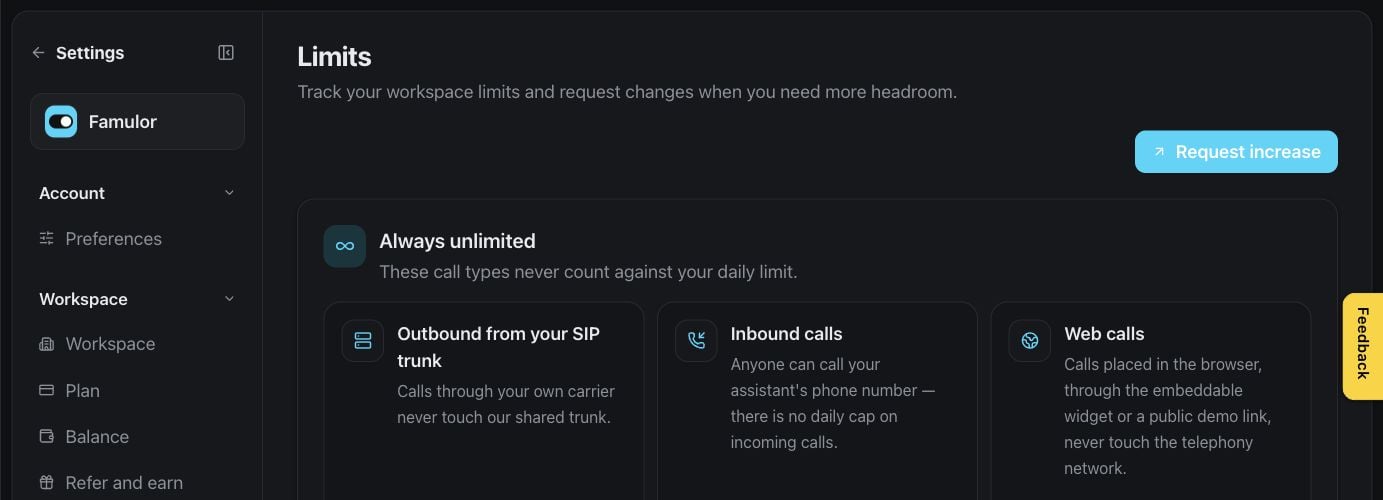
Limits make usage boundaries visible and help teams understand which capabilities are available.
Workspace limits

Review workspace limits

The referral panel shows your referral link and earned benefits where the program is available.
Referral settings

View the referral program

Phone, messaging, and email

Numbers settings are where authorized users manage phone numbers and their assignments.
Phone number settings

Manage phone numbers

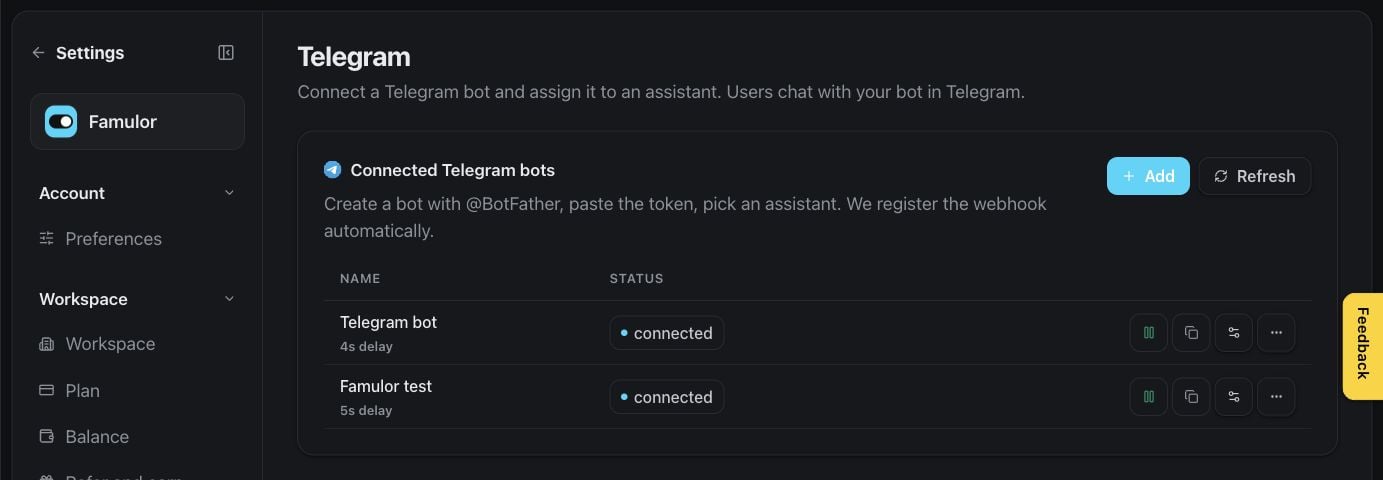
Messaging channels bring supported text-based communication into the workspace.
Messaging channel settings

Configure messaging channels

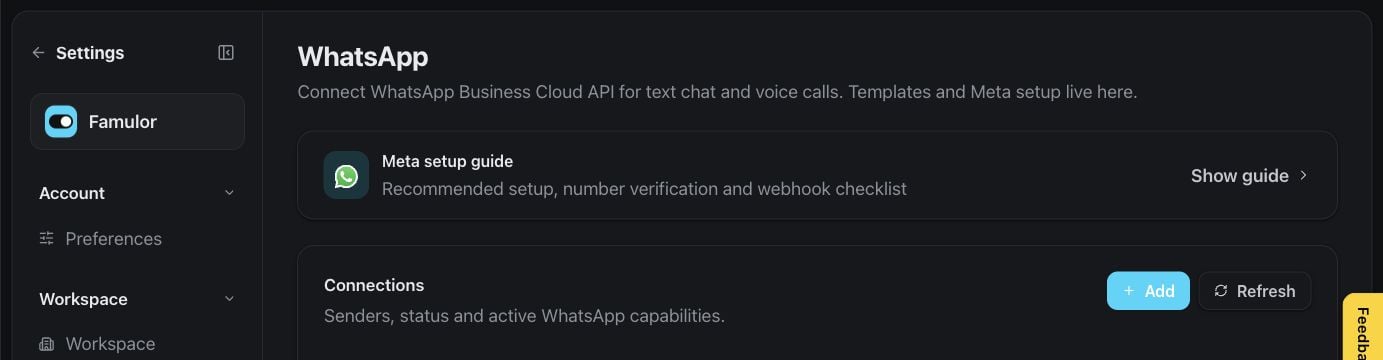
WhatsApp settings guide authorized users through connecting and managing the channel when available.
WhatsApp settings

Manage WhatsApp connectivity

Verification helps teams confirm the senders or destinations required for supported communications.
Verification settings

Manage communication verification

Email settings control the workspace’s supported email experience and sender details.
Email settings

Configure email

Memory, data, and contact controls

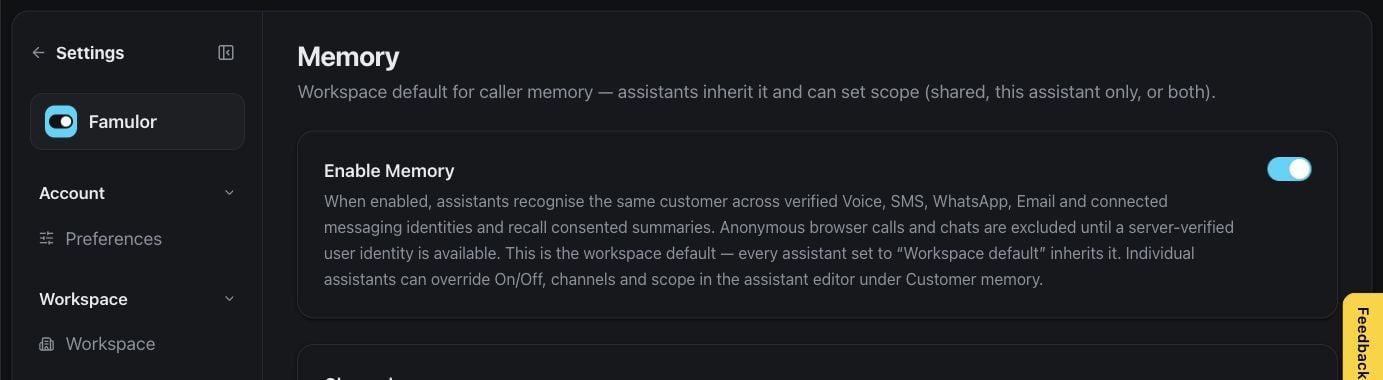
Memory settings define the workspace-wide behavior and visibility of assistant memory.
Memory settings

Configure assistant memory

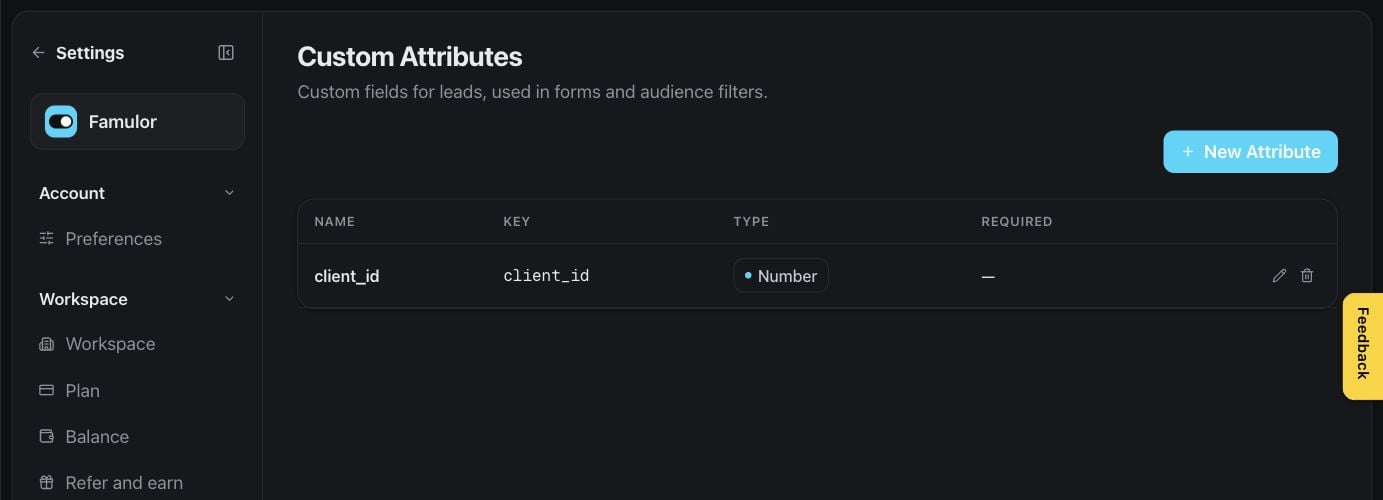
Custom attributes give teams a consistent structure for the information stored with contacts and conversations.
Custom attribute settings

Manage custom attributes

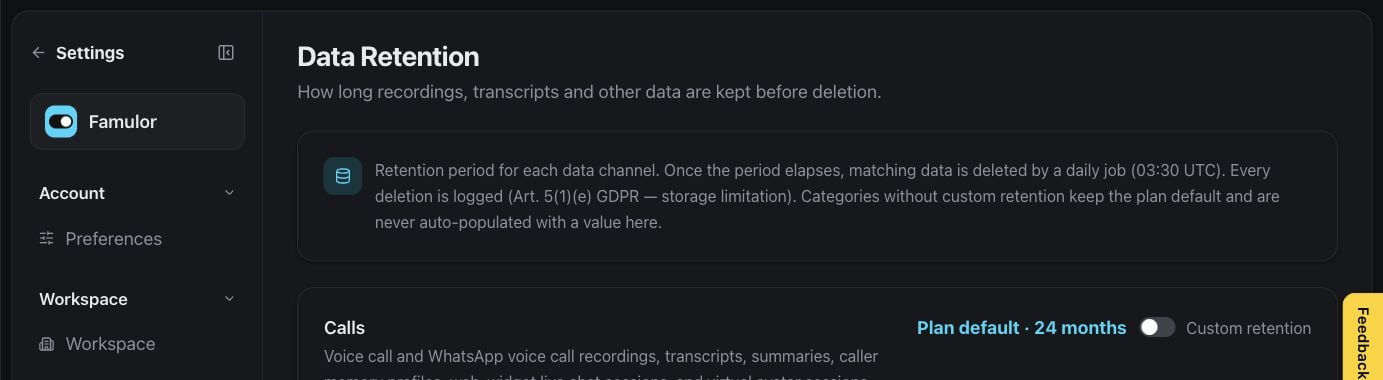
Data retention lets authorized admins choose how long supported workspace data should be kept.
Data retention settings

Choose data retention periods

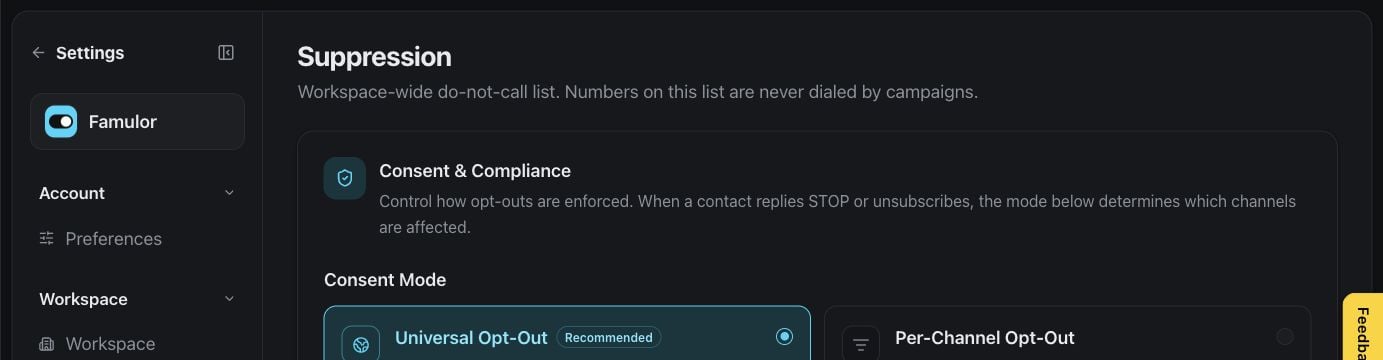
Suppression settings centralize contact restrictions and help prevent unwanted outreach.
Suppression settings

Manage suppression rules

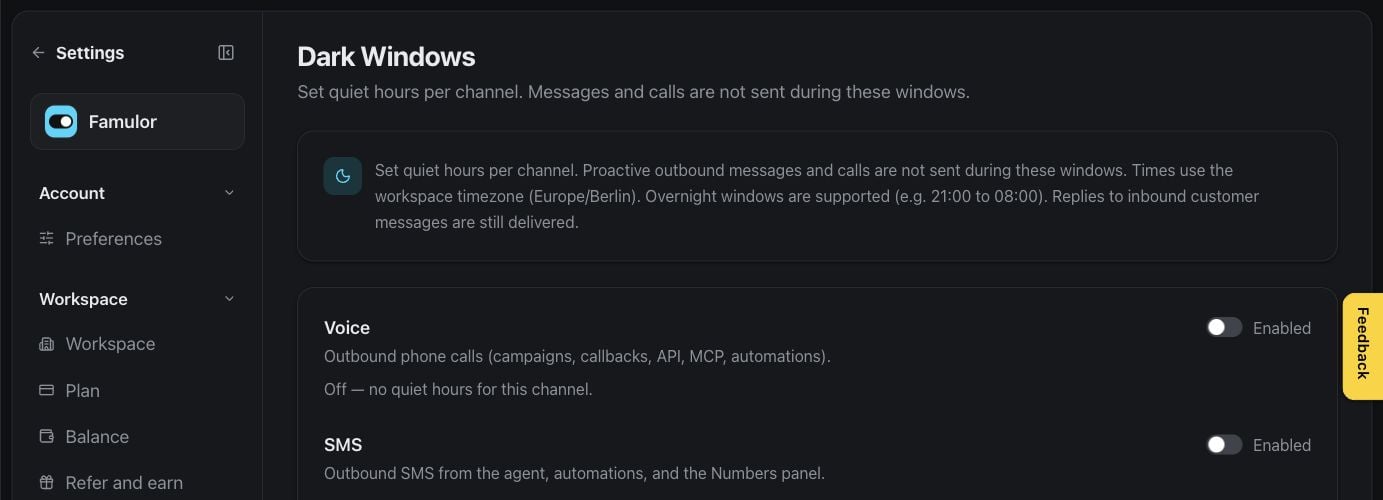
Dark windows define times when automated contact should pause, helping teams respect local schedules.
Dark window settings

Set quiet contact periods

Web experiences and optional features

Web widget settings customize the assistant experience embedded on your website.
Web widget settings

Configure the web widget

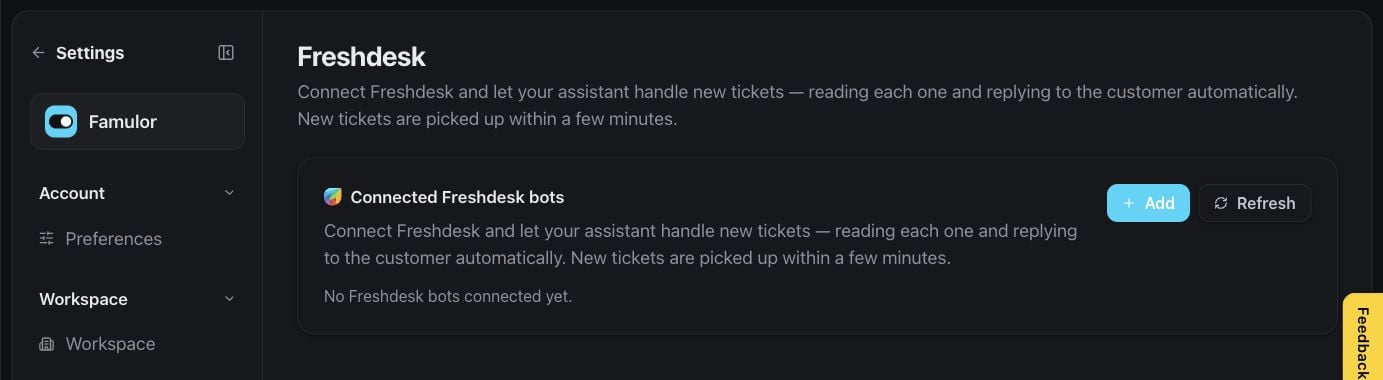
Optional connectors are shown only to workspaces that can try them. Workspace admins decide whether to enable them for the team.
Optional connector settings

Manage optional connectors

Developer access and accountability

The developer access panel is for customers who want to connect their own applications or compatible assistants to Famulor. Treat credentials as secrets and share them only with trusted team members.
API and MCP settings

Manage developer access

The audit log helps authorized admins understand important workspace changes and who made them.
Audit log settings

Review the workspace audit log

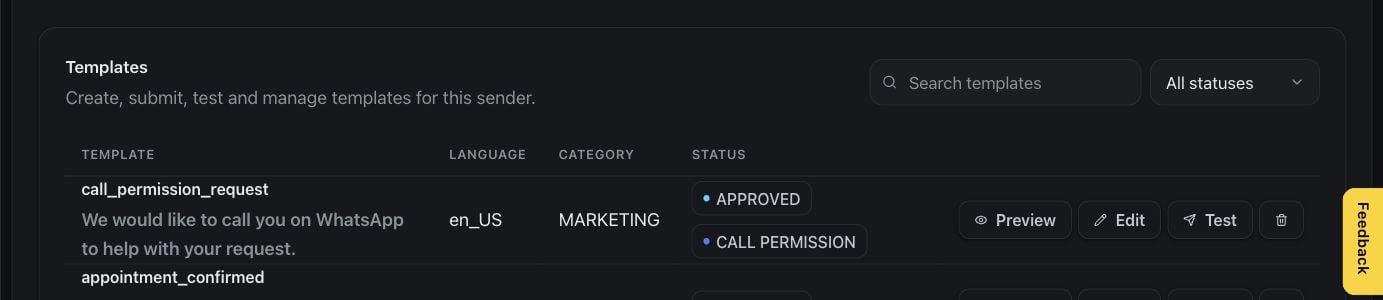
Create WhatsApp templates

Templates let teams prepare approved, reusable messages for supported WhatsApp conversations. Access depends on channel setup and your role.
WhatsApp templates

Manage WhatsApp message templates

Operate a white-label business

The following area is available only to workspace owners and authorized admins with White Label access. Regular workspace members and white-label customers do not see these pages.
The white-label dashboard provides an overview of customer activity and the parts of your branded service that may need attention.
White-label dashboard

White-label business overview

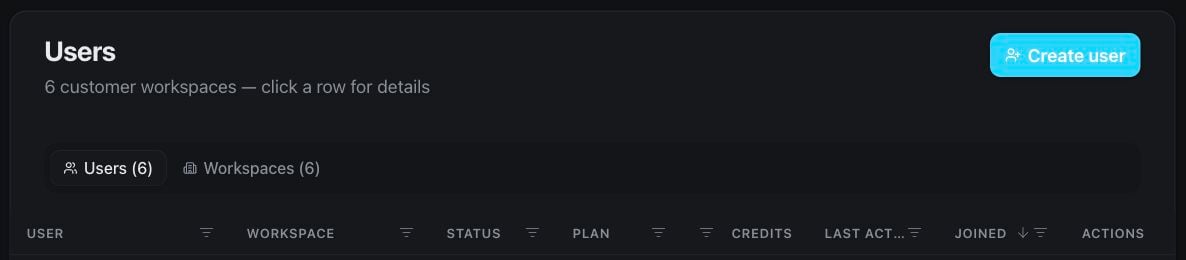
The customers list helps authorized admins find and manage the customer workspaces associated with their service.
White-label customer list

Browse customer workspaces

Open a customer to review the information and actions relevant to that workspace.
White-label customer detail

Review a customer workspace

Plans define the packages you present to your own customers.
White-label plans

Manage customer plans

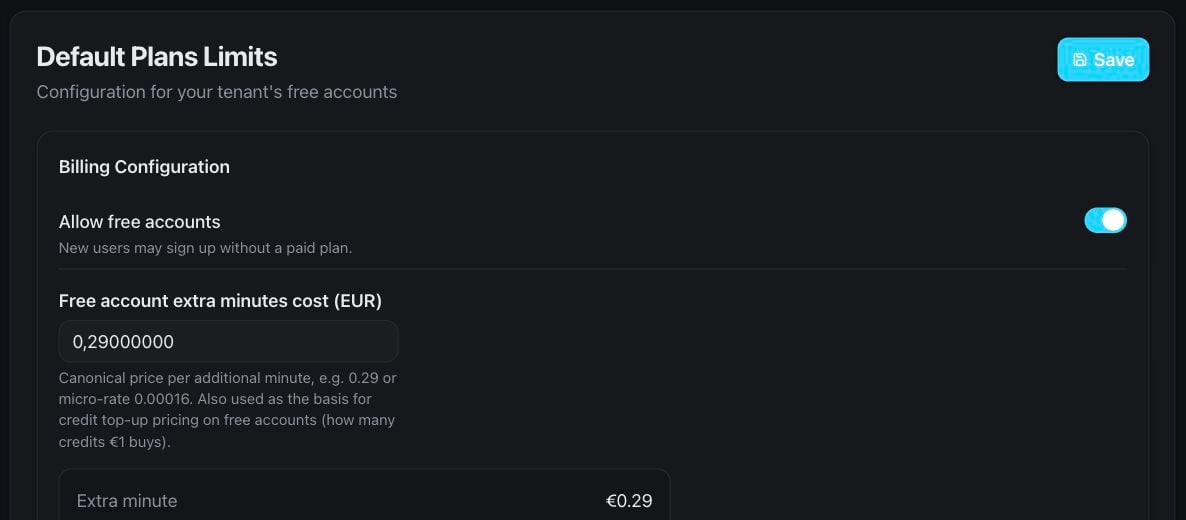
Default limits provide sensible starting boundaries for newly created customer workspaces.
Default customer limits

Set default customer limits

Usage pricing controls how usage is presented and charged within your branded offering.
White-label usage pricing

Configure customer usage pricing

Billing platform settings connect the supported billing experience for your customers. Access is restricted to authorized admins.
White-label billing settings

Manage the customer billing experience

Voice settings let you curate the choices offered to customer workspaces.
White-label voice settings

Curate available voices

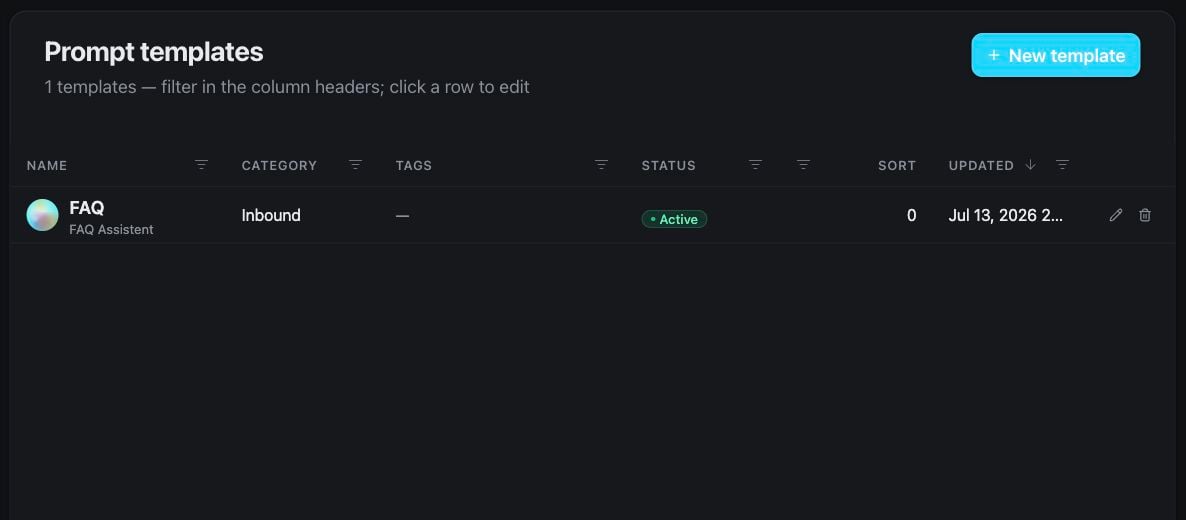
Prompt templates give customers a branded starting point for common assistant use cases.
White-label prompt templates

Manage assistant prompt templates

History gives authorized admins a support-oriented view of customer conversations while respecting the access granted to their role.
White-label conversation history

Review customer conversation history

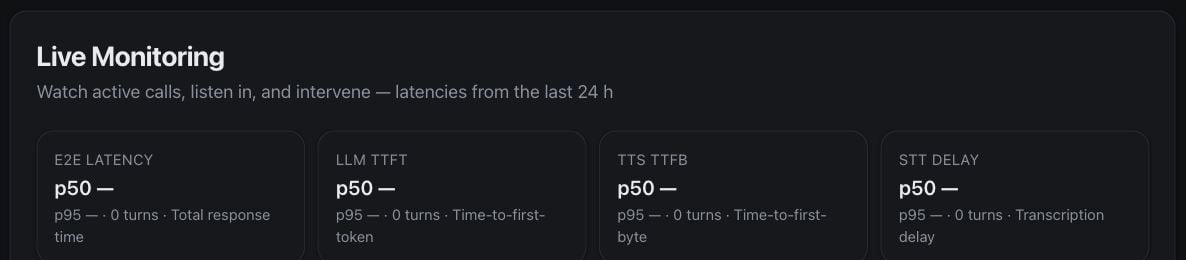
Live monitoring is an optional operational view for authorized white-label admins. Use it only in line with your organization’s privacy and access policies.
White-label live monitoring

Monitor active customer conversations

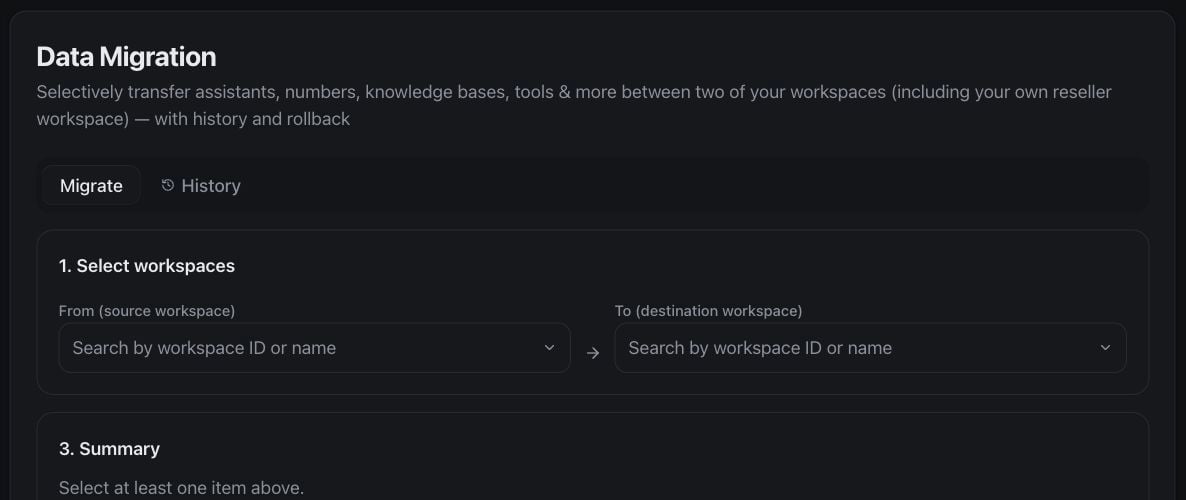
Data migration helps authorized admins guide supported customer information into the white-label service.
White-label data migration

Manage a supported customer data migration

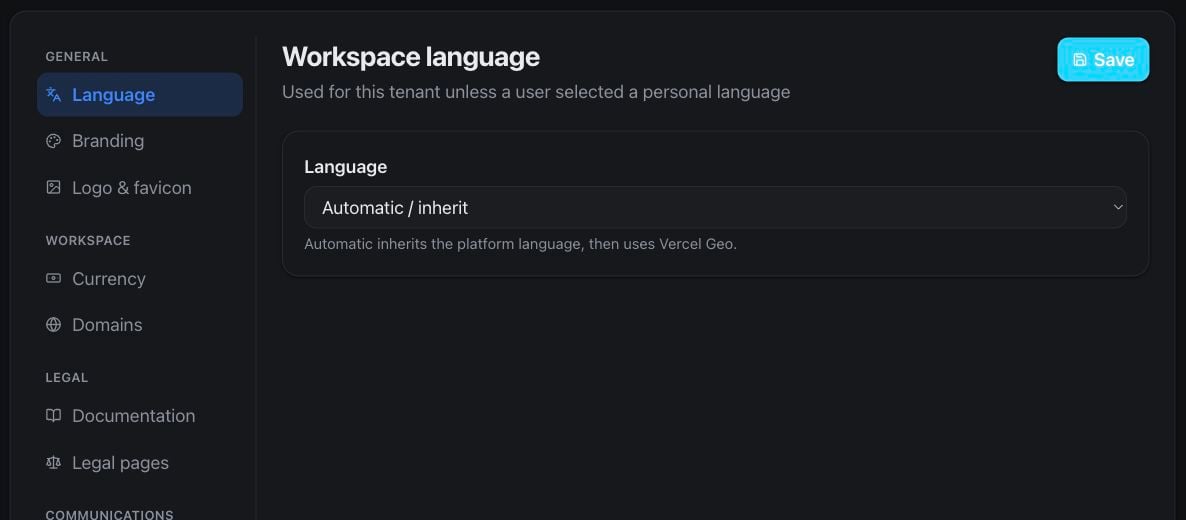
White-label settings control the customer-facing brand, domain, and service experience.
White-label settings

Configure your white-label brand

Where to go next

Create your first assistant

Go from an empty workspace to a browser test call.

Learn the assistant editor

Understand prompts, flows, testing, and publishing.

Prepare a campaign

Plan compliant outbound conversations.

Connect your calendar

Let assistants offer and confirm available appointments.